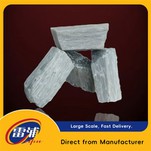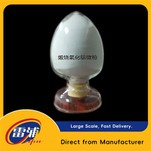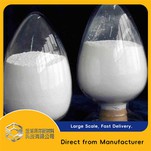

The application of hydrated alumina in flame retardants is mainly based on its environmentally friendly and efficient characteristics as an inorganic halogen-free flame retardant. It is widely used in polymer materials such as plastics, rubber, and cables, achieving flame retardant effects through multiple synergistic mechanisms.
1. Core Flame Retardant Mechanism: Endothermic Cooling + Gas Dilution + Surface Coverage
Hydrated alumina (mainly trihydrated alumina Al(OH)₃) decomposes when heated to 200–250℃, playing three main roles:
Endothermic Cooling: The decomposition reaction absorbs a large amount of heat (approximately 1.97 kJ/g), significantly reducing the surface temperature of the material and slowing down the thermal decomposition process.
2Al(OH)3 → ΔAl2O3 + 3H2O↑ (Endothermic) 2Al(OH)3 ΔAl2O3 + 3H2O↑ (Endothermic)
Dilution of combustible gases: The released water vapor dilutes the concentration of oxygen and combustible gases, making combustion difficult to sustain.
Forming a protective layer: The generated Al₂O₃ residue has a high specific surface area, covering the material surface, isolating oxygen and heat transfer, and inhibiting the diffusion of smoke and harmful gases.
2. Environmental advantages: Halogen-free, low smoke, non-toxic.
Compared with traditional halogenated flame retardants, hydrated alumina has significant environmental advantages:
Halogen-free: Does not produce highly toxic substances such as dioxins, and complies with RoHS, REACH and other environmental standards. Low smoke emission: Releases only water vapor during combustion, with smoke density far lower than halogen-containing materials.
Neutralizes acidic gases: Captures acidic gases such as HCl produced by polymer pyrolysis, reducing corrosive hazards.
3. Main application areas and typical formulations
Table: Application Industry | Typical Material | Dosage | Flame Retardant Effect
Wires and Cables | PVC, PE, EVA | 40%–60% | Meets UL94 V-0 rating, improves fire resistance
Building Panels | Unsaturated polyester, phenolic resin | 30%–50% | Meets GB 8624 B1 fire resistance requirements
Transportation Interiors | PP, ABS, rubber | 30%–40% | Inhibits flame spread, reduces smoke toxicity
Coatings and Adhesives | Fire-retardant coatings, epoxy resin | 10%–20% | Improves fire resistance limit, enhances coating stability