

White Corundum
Material Overview and Manufacturing
White Corundum--globally traded as White Fused Alumina (WFA)--is an industrial-grade electrofused material engineered for applications requiring high chemical purity, controlled abrasive action, and strict particle-size consistency. Produced via the high-temperature electric furnace fusion of alumina-based raw materials, the solidified mass undergoes precision cooling, crushing, screening, classification, and magnetic separation.
For international procurement managers, visual whiteness or high nominal alumina content should never serve as standalone quality metrics. Real suitability depends entirely on chemical limits, impurity profiles, grain morphology, and particle-size distribution matching specific industrial formulations.
-
 Ordinary White CorundumWhite Fused Alumina is an artificial abrasive made from industrial alumina through high-temperature smelting, cooling crystallization, crushing and sieving. Its main component is α-alumina, featuringAdd to Inquiry
-
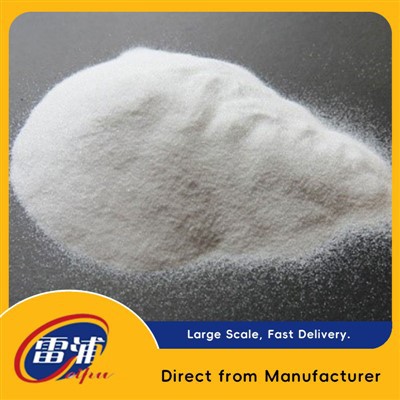 Low-sodium White CorundumWhite Fused Alumina (WFA) is a high-grade synthetic corundum produced from high-quality alumina powder through smelting and crystallization in an electric arc furnace at temperatures above 2000℃. ItAdd to Inquiry
-
 High-purity White CorundumHigh-Purity White Fused Alumina is an artificial material made from industrial alumina powder through smelting in an electric arc furnace at temperatures above 2000°C and subsequent cooling.Its mainAdd to Inquiry


Core Product Configurations
Abrasive Grains
Screened and classified for bonded/coated abrasives, cutting tools, and industrial surface treatment. Key variables include grit designation, particle distribution, bulk density, grain shape, and magnetic iron limits.
Fine Powders
Formulated for applications requiring smaller particle footprints. Specifications must control fine-particle distribution, moisture content, and residual impurities.
Micro-Powders
Engineered for precision surface finishing and advanced technical ceramics where strict control over fine particle behavior dictates manufacturing success.

Abrasive Manufacturing: Focuses on grit size, distribution, hardness, friability, Al2O3 purity, and lot-to-lot consistency to ensure predictable mixing, forming, and grinding performance.
Surface Blasting: Requires stringent control over dust/fine fractions, moisture, cleanliness, and reusability to match specific substrates and equipment profiles.
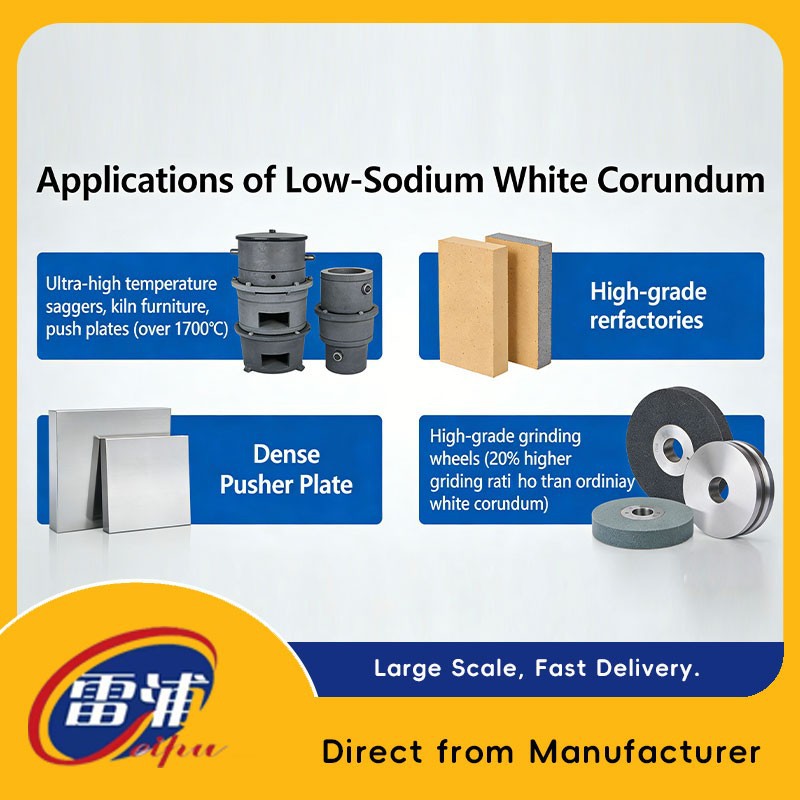
Refractory Formulations: Prioritizes strict control over chemical impurities like Na2O, Fe2O3, and SiO2 alongside bulk density and particle sizing, aligning with harsh service conditions.
Technical Ceramics: Demands precise alkali and iron tracking, powder fineness, and high batch repeatability to prevent structural defects during sintering and processing.
Key Technical Specifications
Chemical Composition
Al2O3 (primary content), Na2O (alkali sensitivity), Fe2O3 (iron contamination tracking), SiO2 (silica limits), and trace oxides.
Particle Size Metrics
Standard grit designations, mesh sizes, micron scales, and distribution metrics (D50/D90) verified via sieve analysis.
Physical Characteristics
Bulk/true density, loose/tapped density, grain morphology, magnetic iron content, and moisture levels.

Quality Control and Variation Factors
Industrial consistency relies heavily on mitigating common manufacturing variables:
Raw Material & Fusion Fluctuations
Inconsistent raw chemistry or electric furnace conditions directly alter crystal structure and impurity profiles.


Mechanical Processing
Variations in crushing equipment and screening accuracy generate undesirable oversize or undersize fractions, shifting particle distribution.
Handling and Packaging
Inadequate protection against moisture ingress and atmospheric contamination damages fine powders during transit.

Traceability
Reliable suppliers maintain strict traceability links spanning raw material intake, production batches, inspection results, and packaging lots.
Practical 6-Step Sample Qualification Process
Confirm Application: Clearly define whether the end use is abrasive, refractory, ceramic, or surface treatment.
Freeze Specification: Agree mutually on chemistry, particle distribution, and physical requirements before sample dispatch.
Run Industrial Trials: Test the sample directly within the actual production formulation or manufacturing process.
Evaluate Performance: Assess processing behavior, particle distribution consistency, and final product output.
Lock Technical Standards: Finalize and freeze the agreed technical data sheet (TDS) ahead of bulk contracting.
Establish Lot Control: Define mandatory pre-shipment testing parameters and Certificate of Analysis (CoA) requirements for all subsequent purchase orders.
FAQ
With abundant experience, we are one of the most professional white corundum manufacturers and suppliers in China. Please feel free to buy high quality white corundum for sale here and get quotation from our factory. For price consultation, contact us.
Low sodium white fused alumina for abrasives and grinding tools, Ordinary White Corundum, Low sodium White Corundum