

Aluminum Hydroxide
Comprehensive Technical & Procurement Guide
Aluminum Hydroxide (Al(OH)3), globally recognized as Aluminum Trihydroxide, Alumina Trihydrate, or Hydrated Alumina, is a premier inorganic functional mineral filler. It is widely utilized across international manufacturing sectors for halogen-free flame-retardant compounds, engineering plastics, rubber, fiberglass-reinforced polymers (FRP), solid-surface materials, and specialized industrial formulations. Optimizing grade selection requires evaluating particle size distribution (PSD), trace impurity thresholds, moisture specs, whiteness, thermal behavior, and surface treatment options.
-
 High Whiteness Filler Alumina Hydroxide (Coarse Powder)High Whiteness Filler Aluminum Hydroxide (Coarse Powder) is an inorganic functional filler based on aluminum hydroxide (Al(OH)₃), with particle size and whiteness controlled by a special process. ItsAdd to Inquiry
-
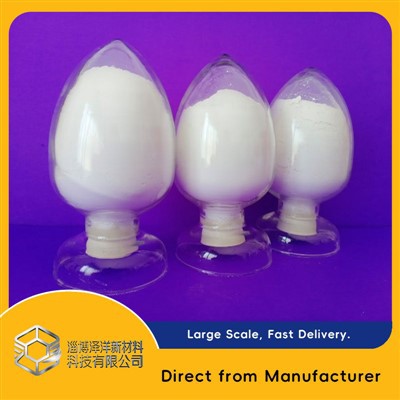 High Whiteness Filler Alumina Hydroxide (Fine Powder)High Whiteness Filler Aluminum Hydroxide (Fine Powder) is a white, non-toxic, odorless inorganic compound. It features high whiteness, low iron content, excellent dispersibility and thermalAdd to Inquiry
-
 Super Fine Aluminum Hydroxide for FillerAluminum Hydroxide Micropowder is an ultra-fine aluminum hydroxide powder produced by precipitation method using high purity sodium aluminate solution as raw material.It is also an eco friendly flameAdd to Inquiry
-
 Super Fine Aluminum Hydroxide Treated with SilaneSilane Surface-Treated Aluminum Hydroxide Micropowder is surface-modified using organosilane with both vinyl and silyl bifunctional groups.Add to Inquiry
-
 Low Viscosity Alumina HydroxideLow-Viscosity Filler Aluminum Hydroxide is an aluminum hydroxide product produced through a special processing technology.It features complete particle morphology, reasonable particle sizeAdd to Inquiry


Product Identification & Chemistry
Chemical Formula: Al(OH)3
CAS Registry Number: 21645-51-2
Material Classification: Inorganic hydroxide functional mineral filler
Physical Form: High-purity white powder
Primary Functions: Halogen-free flame retardant, smoke suppressant, and functional mineral component
Aluminum hydroxide is fundamentally distinct from calcined alumina. While calcined alumina has completed total dehydration, ATH retains critical structural hydroxyl groups and undergoes an endothermic decomposition when exposed to thermal processing thresholds:
2Al(OH)3 -> Al2O3 + 3H2O
This endothermic reaction absorbs significant thermal energy, releases water vapor to cool the surrounding polymer matrix, and constructs a protective inorganic residue layer that inhibits combustion and reduces smoke density.
Critical Grade Selection Parameters

Particle Size Distribution (PSD): Finer grades directly alter surface area, melt viscosity, and dispersion behavior. Procurement teams must request complete distribution metrics—including D10, D50, D90, and top-cut limits—instead of relying solely on a single D50 average.
Chemical Purity: Essential for maintaining electrical insulation, optical clarity, and color stability. Critical trace impurities to track include Na2O, Fe2O3, SiO2, and CaO.
Moisture Control: Differentiate accurately between total moisture, loss on drying, surface moisture, and chemically bound crystal water to ensure compounding stability and consistent material feeding.
Whiteness: Crucial for solid-surface materials, artificial marble, and architectural coatings. Standardized testing methods should be mutually established prior to commercial contracting.
Surface Treatment: Modified grades enhance filler-resin coupling, mechanical strength, and dispersion in demanding polymer matrices. Treatment chemistry and target compatibility must be validated.
Application-Specific Selection Guide
Cable Compounds: Prioritize strict particle size distribution, minimal ionic impurities (Na2O), and stable electrical insulation properties.
Solid Surfaces & Artificial Marble: Focus on high whiteness, controlled particle packing, precise PSD, and superior resin compatibility for flawless surface aesthetics.
Plastics & Thermoset Composites: Balance high filler loading limitations against melt viscosity, processing temperature limits, and impact strength.
Rubber Compounds: Evaluate dispersion characteristics, matrix compatibility, and dynamic mechanical properties.
Water Treatment Raw Materials: Shift technical focus to chemical reactivity, digestion speed, solubility profile, and impurity parameters for manufacturing coagulants such as polyaluminum chloride.

Technical Specification Checklist for Procurement
When issuing requests for quotation (RFQs) or evaluating manufacturing partners, ensure documentation covers the following parameters:

Analytical Documents
Technical Data Sheet (TDS), Safety Data Sheet (SDS), and batch-specific Certificate of Analysis (COA).

Physical & Chemical Metrics
Al(OH)3 assay, trace oxides (Fe2O3, Na2O), bulk density, and moisture content.

Quality Assurance
Documented particle-size test reports, batch traceability systems, and verified packaging standards.
Frequently Asked Questions
With abundant experience, we are one of the most professional aluminum hydroxide manufacturers and suppliers in China. Please feel free to buy high quality aluminum hydroxide for sale here and get quotation from our factory. For price consultation, contact us.
Ground Aluminum Hydroxide coarse, Ultrafine Aluminum Hydroxide, Super Fine Aluminum Hydroxide Treated with Silane