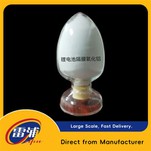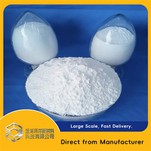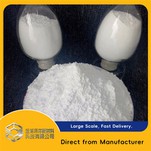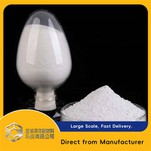

Hydrated alumina has a wide range of applications and is a key functional material in flame retardancy, catalysis, ceramics, environmental protection, and new energy fields.
Flame Retardant Materials (Core Application)
Aluminum hydroxide (alumina trihydrate) is the most widely used inorganic flame retardant globally, accounting for approximately 70% of the total consumption of inorganic flame retardants. Its flame retardant mechanism is as follows:
Heat Absorption and Cooling: It absorbs a large amount of heat (approximately 1967 kJ/kg) during decomposition at 200–250℃, inhibiting the thermal decomposition of the material.
Dilution and Insulation: It releases water vapor to dilute flammable gases and forms a dense alumina insulating layer on the surface, preventing oxygen contact.
Environmentally Friendly and Safe: Halogen-free, low-smoke, and non-toxic, it complies with RoHS and other environmental standards and is widely used in plastics, rubber, cables, building materials, etc.
Catalysts and Supports
Hydrated alumina is a major precursor to active alumina (such as γ-Al₂O₃) and is widely used in petrochemical and environmental catalysis:
Petroleum refining: As an FCC catalyst support, it improves the efficiency and thermal stability of heavy oil cracking.
Automotive exhaust treatment: High-purity boehmite is used as a support for ternary catalysts to enhance resistance to heavy metals.
Catalytic binder: Acidified boehmite can improve the pore structure and molding strength of catalysts.
New Energy Materials (Key Components of Lithium-ion Batteries)
Nano-boehmite and boehmite play important roles in lithium-ion batteries:
Separator coating: Improves heat resistance (>500℃), puncture resistance, prevents thermal runaway, and enhances battery safety.
Electrode coating: Prevents burrs from puncturing the separator, improving rate performance and cycle life.
In 2022, China's shipments of boehmite for lithium-ion battery separators reached 32,000 tons, with rapid market demand growth.