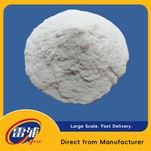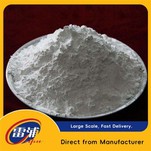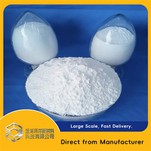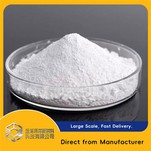

The production process of hydrated alumina mainly falls into two categories based on the source of raw materials, product purity, and crystal form requirements: industrial-scale production and high-purity/special material preparation. Core processes include the Bayer process, precipitation process, aluminum alkoxide hydrolysis process, and hydrothermal synthesis process.
Mainstream Industrial Production Processes
Bayer Process: Approximately 95% of the world's alumina is produced using this method, making it the mainstream process for processing high-grade bauxite. Its core flow is as follows:
Dissolution: Crushed bauxite is reacted with a concentrated sodium hydroxide solution under high temperature and pressure (140–250°C, 3–4 MPa) to dissolve the hydrated alumina (such as gibbsite) into a sodium aluminate solution.
Separation: Insoluble residues (red mud) are removed through sedimentation and filtration to achieve solid-liquid separation.
Decomposition: Aluminum hydroxide seed crystals are added to the sodium aluminate solution to induce decomposition and precipitate aluminum hydroxide. Calcination: Aluminum hydroxide is calcined and dehydrated at 1000–1200°C to obtain metallurgical-grade alumina (Al₂O₃).
This method is mature and low-cost, but it is only suitable for low-silica bauxite ores and generates a large amount of red mud waste.
Carbonation Process: Used to prepare high-purity or specific particle size aluminum hydroxide. Sodium aluminate solution is gradually neutralized by passing CO₂ gas through it, lowering the pH to the precipitation range (pH≈10–11), causing aluminum hydroxide to precipitate. This method allows for precise control of product particle size and crystallinity and is often used to prepare boehmite precursors.
Acid and Alkali Precipitation Methods
Acid Method: Using aluminum salts such as AlCl₃ or Al₂(SO₄)₃ as raw materials, the pH is adjusted to 6–8 with ammonia or NaOH to generate amorphous or crystalline hydrated alumina precipitate.
Alkaline Method: Using sodium aluminate as raw material, precipitation is achieved through neutralization with acid or CO₂. By controlling pH, temperature, and aging time, target crystal forms such as boehmite (γ-AlOOH) or pseudoboehmite can be obtained.
Special Preparation Processes for High-End Materials
Alcoholate Hydrolysis: Used to prepare high-purity, nano-sized hydrated alumina, especially suitable for electronic-grade and catalyst-grade products.
Aluminum reacts with isopropanol to form aluminum isopropoxide:
2 Al +
6 ( CH 3 ) 2 CH OH →
2 Al [ O CH ( CH 3 ) 2 ] 3 +
3 H 2 2Al + 6(CHX 3
)X 2
CHOH
2Al[OCH(CHX 3
)X 2
]X 3
+3HX 2
Aluminum isopropoxide hydrolyzes in steam at 175°C to form monohydrated alumina (boehmite):
2
Al[OCH(CH3)2]3 + 4H2O(g) → Al2O3 ⋅ H2O + 6 (CH3)2CHOH2Al[OCH(CHX3)X2]X3 + 4HX2O(g)
AlX2OX3 ⋅HX2O+6(CHX3)X2O The CHOH method produces products with high purity (≥99.9%) and uniform particle size, but at a higher cost.