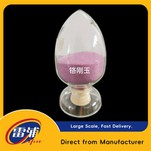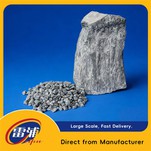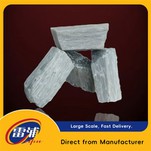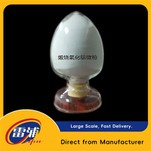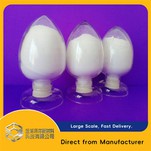

Hydrated alumina is a class of alumina compounds containing water of crystallization. It exists in various crystalline and amorphous forms and is widely used as a catalyst support, flame retardant, ceramic raw material, and lithium battery material.
Main Characteristics and Types
Chemical Composition and Synonyms
Hydrated alumina generally refers to hydrated aluminum compounds with the chemical formula Al₂O₃·nH₂O or Al(OH)₃. Common synonyms include:
Aluminum hydroxide (ATH): Al(OH)₃ trihydrate, CAS No. 21645-51-2
Boehmite: γ-AlOOH monohydrate, CAS No. 1318-23-6
Pseudoboehmite (PB): Incompletely crystalline hydrated alumina, chemical formula AlOOH·nH₂O (0.08 < n < ... 0.62)
Physical and Chemical Properties
Appearance: Mostly white powder or colloidal precipitate, non-toxic and odorless.
Solubility: Insoluble in water and alcohol, soluble in inorganic acids and alkaline solutions.
Thermal Stability: Dehydrates upon heating above 200℃, decomposes significantly around 300℃, producing alumina and water.
Amphoteric Properties: Reacts with both acids and alkalis to form aluminum salts and aluminates.
High Specific Surface Area and Porosity: For example, boehmite can have a specific surface area of 200–600 m²/g, exhibiting excellent adsorption and catalytic properties.