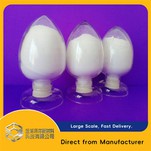

Fused alumina is primarily used in high-performance industrial fields. Its high hardness, high purity, excellent thermal stability, and chemical inertness make it a core material in many key industries.
Abrasives and Grinding (Most Widely Used)
Fused alumina is the cornerstone of the abrasive industry, widely used in various grinding, cutting, and polishing processes:
Bonded Abrasives: Used as the main abrasive in grinding wheels, cutting discs, and grinding heads for grinding and finishing metals, ceramics, and glass.
Coated Abrasives: Used in sandpaper and abrasive belts for surface treatment of high-hardness materials such as stainless steel and cemented carbide.
Sandblasting: Utilizing its high hardness and sharp edges, it is used for sandblasting cleaning, rust removal, oxide scale removal, and surface roughening before coating of metal workpieces.
Precision Polishing: Ultrafine fused alumina powder (e.g., 4000 mesh) is used for chemical mechanical polishing (CMP) of optical glass, semiconductor wafers, and sapphire screens to achieve nanoscale smoothness.
Refractory Materials (High-Temperature Industrial Support)** Fused alumina is a key aggregate in high-end refractory materials, used in extreme high-temperature environments:
Metallurgical Industry: Used in the manufacture of refractory bricks and castables for blast furnaces, electric furnaces, and ladle linings, resisting erosion by molten metal and slag.
Glass Industry: Used in critical components of glass kilns, such as pool walls, flow channels, and feeders, resisting the scouring and chemical corrosion of high-temperature molten glass.
Ceramics and Cement Industry: Used as lining material for high-temperature kilns, ensuring long-term stable operation.
Electronics and Semiconductor Industry
High-purity fused alumina (such as white fused alumina) is a core raw material for electronic ceramics:
Electronic substrates and packaging: Used to manufacture integrated circuit (IC) substrates, ceramic housings, insulators, etc., utilizing its high insulation, low dielectric loss, and good thermal conductivity.
Semiconductor equipment: Used to manufacture components for plasma etching chambers, requiring extremely high material purity to avoid wafer contamination.
Other electronic components: Used to manufacture spark plugs, sensors, radar radomes, etc.