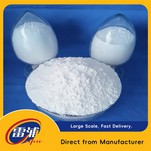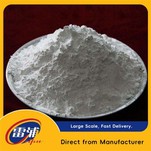

The production process of fused alumina involves melting raw materials in a high-temperature electric arc furnace, followed by cooling, crystallization, crushing, and sorting. The core of this process lies in controlling the purity of the raw materials, the smelting atmosphere, and the cooling rate to obtain corundum products with different properties.
Core Production Process
Raw Material Preparation
White Corundum: Uses high-purity industrial alumina powder (Al₂O₃ ≥ 98.5%) as raw material, with extremely low impurity content (such as Na₂O, Fe₂O₃, SiO₂).
Brown Corundum: Uses bauxite as the main raw material, with the addition of anthracite and iron filings, and is smelted under a reducing atmosphere.
Sub-white Corundum: Uses premium or first-grade bauxite, achieving higher purity (Al₂O₃ ≥ 98.5%) by controlling the reducing conditions.
High-Temperature Electrofusion
The raw materials are fed into an electric arc furnace and melted at a high temperature of 2000~2300℃:
White Corundum: Melted in an oxidizing atmosphere, with virtually no chemical reaction; only the melting of Al₂O₃ and recrystallization of α-Al₂O₃ occur.
Brown Corundum: Melted in a reducing atmosphere, impurities such as SiO₂ and Fe₂O₃ are reduced and separated into slag and molten iron.
Dense Corundum: By precisely controlling the degree of refining and the cooling rate, alkali metal vapors such as K and Na are eliminated, resulting in a high-density, low-porosity structure.
Cooling and Crystallization
After the molten material is poured out of the furnace, it is cooled according to different processes:
Massive Corundum: Naturally cooled to form large molten blocks, which are then crushed and sieved to obtain products of different particle sizes. * **Tabular Corundum:** Controlling the cooling rate of the melt promotes grain growth along a two-dimensional direction, forming plate-like α-Al₂O₃ crystals, improving thermal stability and thermal shock resistance.
Hollow Sphere Corundum: Molten metal is sprayed with a high-pressure airflow, causing droplets to rapidly cool and shrink in the air, forming hollow alumina spheres for use in lightweight insulation materials.
Post-processing:
Crushing and Sieving: The cooled molten metal is crushed and graded by particle size (e.g., #12, F80, F230, etc.).
Purification Treatment:
Acid Washing/Water Washing: Removes residual impurities from the surface, improving purity.
Magnetic Separation: Removes iron inclusions, reducing Fe₂O₃ content.
Overflow Grading: Ensures uniform particle size distribution, meeting the needs of high-end applications.