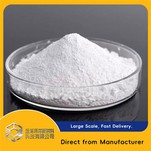

Alumina preparation methods are mainly divided into two categories based on the target crystal form and application requirements: industrial-scale production and laboratory/functionalized customization. Core pathways include Bayer process purification, high-temperature calcination phase transformation, sol-gel synthesis, and hydrothermal synthesis.
Industrial Mainstream: Bayer Process + Calcination Process (Large-scale production of α-Al₂O₃)
This is the source of approximately 95% of the world's alumina and is suitable for extracting high-purity alumina from bauxite.
Raw Material Processing: Bauxite is crushed and leached with a high-temperature sodium hydroxide solution to generate soluble sodium aluminate. Impurities are separated as red mud.
Seed Crystal Decomposition: Aluminum hydroxide seeds are added to the purified sodium aluminate solution, and the solution is cooled and stirred to precipitate aluminum hydroxide.
Calcination Conversion: Aluminum hydroxide is calcined at 950–1200℃, dehydrated, and converted into stable α-Al₂O₃ powder. The particle size and morphology of the product (e.g., spherical or columnar) can be controlled by adjusting temperature, additives (such as fluorides), and grinding methods.
Common Preparation Methods of γ-Al₂O₃ (Activated Alumina)
γ-type alumina is widely used in catalysis and adsorption due to its high specific surface area and porous structure. Its precursors are often boehmite or boehmite.
Calcination of Boehmite: Boehmite (AlOOH) is calcined at 400–600℃ to dehydrate and form γ-Al₂O₃. Excessive temperature will directly transform it into the θ or α phase.
Chemical Precipitation: Aluminum salts such as aluminum nitrate are used as raw materials. Ammonia or ammonium bicarbonate is added to generate Al(OH)₃ precipitate, which is then washed, dried, and calcined at around 500℃ to obtain γ-Al₂O₃.
Sol-gel method: Aluminum alkoxides (such as aluminum isopropoxide) are hydrolyzed to form a sol, which is then gelled, dried, and calcined to obtain high-purity γ-Al₂O₃ with a controllable pore structure, suitable for nanoscale powders.
Carbonization method: CO₂ is bubbled into a sodium aluminate (NaAlO₂) solution to generate boehmite, which is then calcined to obtain γ-Al₂O₃. This method is low-cost and suitable for large-scale industrial production.