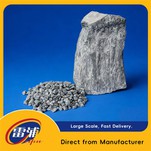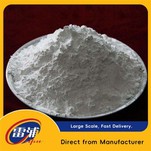

The purity of fused alumina materials mainly depends on their raw materials and production processes. Different types vary significantly in purity, directly affecting their performance and application areas.
Core Purity Classification and Standards
White Fused Alumina (Fused White Fused Alumina)
Al₂O₃ content ≥99%, the highest purity fused alumina.
Using industrial alumina or calcined alumina as raw materials, with very few impurities (e.g., Na₂O <0.5%), the main crystalline phase is α-Al₂O₃.
High purity results in excellent hardness (Mohs 9.0), thermal stability, and chemical inertness, making it suitable for precision machining in semiconductors, optical glass, etc.
Sub-White Fused Alumina
Al₂O₃ content ≥98.5%, between white fused alumina and brown fused alumina.
Brown Corundum: Prepared by electro-melting under controlled reduction conditions using premium bauxite, it exhibits low apparent porosity (<4%), combining high purity with good toughness.
Commonly used in high-performance refractory materials and mid-to-high-end abrasives.
Brown Corundum
Al₂O₃ content is approximately 76%~90% or higher, fluctuating depending on the raw material grade (e.g., Grade 1 sand).
Made from bauxite under a reducing atmosphere, it contains more impurities such as Fe₂O₃ and SiO₂, resulting in a brownish-red color.
Although its purity is lower, it boasts good toughness and low cost, making it widely used in metal blasting and as aggregate in refractory materials.
Dense Corundum
Al₂O₃ content is typically ≥98%, achieved through a special cooling process to obtain a denser structure.
High bulk density (≥3.8 g/cm³), excellent thermal shock resistance, used in critical high-temperature components in glass furnaces and metallurgical continuous casting.