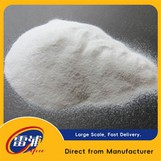

If you're an aluminum hydroxide supplier like me, one thing we know firsthand is that even a high-quality product can go to waste if it's stored wrong. Aluminum hydroxide (ATH) might seem like a straightforward, stable material, but cut corners on storage, and you'll end up with clumpy, discolored, or degraded powder that can't perform as intended for your customers-whether they're using it as a flame retardant in plastics, a filler in paint, or a raw material for specialty ceramics. Over my 12 years in this industry, I've seen way too many warehouses mess up storage, and it's not just a small headache for them-it's a huge loss for both their bottom line and ours when they have to return or replace stock. Today, I'm breaking down exactly what storage conditions work best for aluminum hydroxide, why they matter, and even how a few small adjustments can make your product last way longer.
First, let's start with the basics: aluminum hydroxide is a hydrated alumina, meaning it has water molecules bound to its crystal structure. That's why it's such a go-to for flame retardants-when heated, it releases that water, cools materials down, and puts out fires. But that same hydration makes it sensitive to two big enemies: excess moisture in the air and extreme heat. Wait, I know some folks think "hydrated" means it can handle water, but that's not the case here. Absorbing too much free moisture from the atmosphere can cause the fine powder to clump together, which is a nightmare for customers who rely on consistent particle size-think paint manufacturers, who need ATH to spread evenly, or plastics producers, who don't want clogs in their processing equipment. Heat, on the other hand, can actually speed up the dehydration of the bound water (we're not talking boiling here, but prolonged exposure to temps over 120°F/49°C) which weakens its flame-retardant properties long before it even reaches the customer.
Let's get specific about humidity first. Industry standards, and what we've tested repeatedly, say relative humidity (RH) needs to stay between 40% and 60% for dry storage. Why that range? Below 40% RH, the powder can lose a little of its surface moisture, but honestly, that's not a big issue-most storage areas aren't that dry. The problem is above 60% RH. I've had a customer once who stored a batch of super fine aluminum hydroxide treated with silane in a drafty warehouse near a loading dock where RH hit 75% every rainy season. By the time they reached out to us, 30% of the batch was hard, solid clumps that they couldn't sift out. They lost almost $15k worth of product, and we had to rush them a replacement, which cost us extra in expediting. So that's a real, tangible cost you can avoid just by monitoring humidity. Pro tip: get a cheap digital hygrometer for each storage bay-they're like $20 on Amazon, and way cheaper than replacing ruined ATH.
Next, temperature. Let's keep it below 100°F (38°C) if you can, and definitely no prolonged exposure over 120°F. Warehouses in hot climates, like parts of the Southwestern US, or places with poor ventilation can slip up here. We once had a client in Arizona who stacked pallets right next to a metal roof that hit 130°F in July. Their High Whiteness Filler Alumina Hydroxide (Coarse Powder) came out with a slightly off-white tinge (from minor surface dehydration) and when they tested its flame-retardant performance, it was 8% lower than our specs. Luckily, we were able to process it back to standard, but that was a week of extra work and a big hassle for them. The fix? Simple-stack pallets at least 18 inches off the floor and away from walls or heat sources (like heaters, vents, or direct sunlight), and make sure your warehouse has cross ventilation if you're in a hot area.


Now, packaging might seem like a secondary detail, but it's actually one of the biggest lines of defense. We've seen customers use cheap, flimsy plastic bags that tear easily, or even cardboard boxes without a moisture barrier-total no-gos. For bulk storage, our recommendation has always been thick, food-grade (or industrial-grade) polypropylene liners with a high-density outer bag, plus a kraft paper layer for puncture resistance. If you're storing smaller 50lb or 100lb bags, look for ones that are labeled "moisture-sealed" or "heat-sealed." And never leave bags open after you've taken material out-even a small opening can let in enough moisture over a few days to start clumping. For our specialty products, like the Low Viscosity Alumina Hydroxide that's used in epoxy resins, we add a small desiccant packet to each small batch because its fine particle size is extra prone to moisture buildup. That's a trick we picked up from working with epoxy manufacturers who can't afford any viscosity changes from clumpy ATH.
Wait, let's talk about different types of ATH, because storage needs aren't one-size-fits-all. The super fine stuff, like Super Fine Aluminum Hydroxide Treated with Silane, is way more sensitive than coarser powders. Why? Because its tiny particle size means it has more surface area exposed to air, so it absorbs moisture faster. If you store that silane-treated fine powder in a bay with 65% RH, you'll see clumps in 2-3 weeks, whereas a coarse High Whiteness Filler Alumina Hydroxide (Coarse Powder) might last 6-8 weeks in the same conditions. For the filler-grade ATH, which customers often mix into large batches of paint or rubber, we tell them to avoid stacking more than 5 pallets high. Stacking too heavy can crush the bottom pallets, breaking the packaging and exposing the powder. We've even had a customer who stacked 9 pallets, and the bottom one burst, spilling 2000 lbs of ATH that had to be thrown out because it was contaminated with floor dust. Lesson there: follow the pallet weight limit (usually around 1500 lbs per pallet) and keep stacks low.
Another common mistake is storing aluminum hydroxide near other chemicals. I know warehouses are tight, and you might want to save space, but don't put ATH next to acids, ammonia, or even fertilizers. Why? Because aluminum hydroxide is amphoteric-it reacts with both strong acids and bases, and those reactions can break down its crystal structure. Even fumes from ammonia (like if you're storing cleaning supplies nearby) can react with the surface of the ATH, leading to discoloration or reduced performance. We had a client once who stored ATH next to a pallet of liquid fertilizer drums that leaked a little ammonia. The resulting batch of High Whiteness Filler Alumina Hydroxide (Fine Powder) had a gray tint, and they couldn't sell it to cosmetic companies who need pure white fillers. So keep ATH isolated from reactive chemicals, at least 10 feet away, to avoid that kind of cross-contamination.
What about long-term storage? If you're holding ATH for more than 6 months, you need to do a couple extra things. First, roll the pallets every 30 days-wait, why? Because over time, the powder in the bottom of the bag can settle and compact, especially if there's any moisture. Rolling helps break up that light compaction before it turns into hard clumps. Second, test a small sample every 3 months. It's super easy-just take a 1lb sample from the middle of a pallet, sift it through a 20-mesh screen, and check for clumps. If you see more than 5% of the sample is clumped, move it to a lower humidity area or use it sooner. We have a few clients who pre-order large batches for production runs, and this testing routine has cut their waste by 70% compared to when they just stored it and forgot about it.
Now, as someone who supplies ATH, we also give these storage tips to our customers because it's not just about getting their order right-it's about making sure they use our product effectively. If you're a buyer, don't be afraid to ask your supplier for storage-specific advice based on the grade you're getting. For example, if you're ordering Super Fine Aluminum Hydroxide for Filler, they'll probably tell you it needs a lower humidity area than the coarse grade. And if you're storing in a self-storage unit or a temporary space, make sure it's not in a garage where temperature swings are extreme-garages can hit 100°F in the summer and 30°F in the winter, which is tough on ATH.
Let's wrap this up with the most important takeaways: keep RH between 40-60%, temp below 100°F, use proper sealed packaging, isolate from reactive chemicals, and check on your product regularly. If you're ever unsure about storage conditions for a specific ATH grade, or you need product tailored to your application, reach out to your supplier-we're always here to help. For more details on our different grades, you can check out our product pages: Low Viscosity Alumina Hydroxide, Super Fine Aluminum Hydroxide Treated with Silane, Super Fine Aluminum Hydroxide for Filler, High Whiteness Filler Alumina Hydroxide (Coarse Powder), and High Whiteness Filler Alumina Hydroxide (Fine Powder).
Ready to stock up on quality aluminum hydroxide that's easy to store and ready to perform? Get in touch to connect with our team for custom orders and storage guidance tailored to your needs.
References
- The Global Alumina Company. (2022). "Storage Best Practices for Hydrated Alumina Powders." Industry Technical Bulletin.
- American Chemical Society. (2021). "Amphoteric Properties of Aluminum Hydroxide and Chemical Compatibility Guidelines." Journal of Industrial Chemistry.
- National Fire Protection Association. (2020). "Flame Retardant Materials: Stability and Dehydration Under Extreme Temperatures." NFPA 70E Technical Report.
- Industrial Packaging Association. (2023). "Moisture Barrier Packaging Standards for Fine Inorganic Powders." Packaging Engineering Journal.