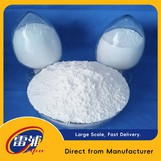

Hey there! As a white corundum supplier, I often get asked about the fracture toughness of white corundum. So, I thought I'd take a moment to share some insights on this topic.
First off, let's talk about what fracture toughness actually means. Fracture toughness is a measure of a material's ability to resist crack propagation. In simpler terms, it tells us how well a material can withstand the growth of cracks when it's under stress. For white corundum, this is a crucial property, especially in applications where the material is subjected to high levels of stress or impact.
White corundum is a type of alumina (Al₂O₃) that's known for its high hardness, wear resistance, and chemical stability. It's widely used in various industries, including abrasives, refractories, ceramics, and composites. But when it comes to fracture toughness, there are a few factors that can influence it.
One of the main factors is the purity of the white corundum. High - purity white corundum generally has better fracture toughness compared to its lower - purity counterparts. The high - purity material has fewer impurities, which means there are fewer weak points in the structure where cracks can initiate and grow. If you're interested in high - purity white corundum, you can check out High - purity White Corundum.
Another factor is the crystal structure of the white corundum. The crystal structure affects how the material responds to stress. A well - ordered crystal structure can provide better resistance to crack propagation. The manufacturing process can also play a role in determining the crystal structure and, consequently, the fracture toughness.
The particle size of the white corundum is also important. Smaller particle sizes can sometimes lead to higher fracture toughness. This is because smaller particles can distribute stress more evenly throughout the material, reducing the likelihood of crack formation and growth.

Now, let's look at some of the different types of white corundum and how their fracture toughness might vary.
Ordinary white corundum is a commonly used type. It has a good balance of properties, including a decent level of fracture toughness. It's suitable for many general - purpose applications. You can find more information about Ordinary White Corundum.
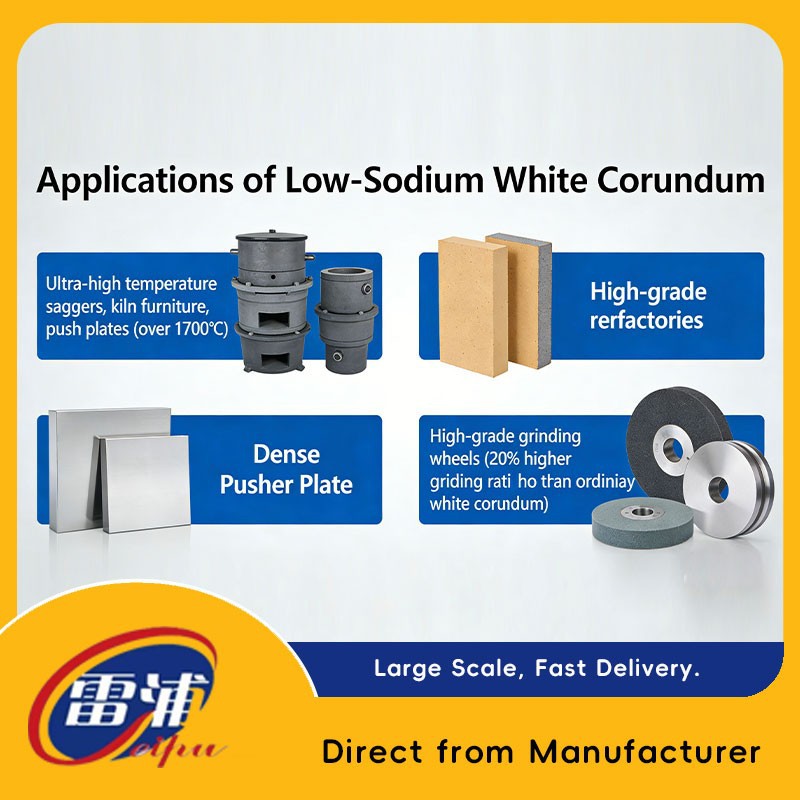
Low - sodium white corundum is another option. The low sodium content can improve the material's performance in high - temperature applications and also has an impact on its fracture toughness. The reduced sodium helps to maintain the integrity of the crystal structure at high temperatures, which in turn can enhance the fracture toughness. If you're looking for low - sodium white corundum, you can visit Low - sodium White Corundum.
In practical applications, understanding the fracture toughness of white corundum is essential. For example, in abrasive applications, a material with high fracture toughness can maintain its shape and cutting ability for longer periods. In refractory applications, it can withstand thermal shock and mechanical stress without cracking easily.
When it comes to testing the fracture toughness of white corundum, there are several methods available. One common method is the indentation method. In this method, a hard indenter is pressed into the material, and the resulting crack pattern is analyzed to determine the fracture toughness. Another method is the single - edge notched beam (SENB) test, where a pre - cracked specimen is loaded until it fractures, and the fracture toughness is calculated based on the load and crack length.
So, if you're in the market for white corundum and need a material with good fracture toughness, it's important to consider the factors I've mentioned above. Whether you need high - purity, ordinary, or low - sodium white corundum, we can help you find the right product for your specific application.
If you have any questions about the fracture toughness of white corundum or are interested in purchasing our products, feel free to reach out. We're here to assist you with all your white corundum needs.
References:
- "Materials Science and Engineering: An Introduction" by William D. Callister, Jr. and David G. Rethwisch.
- "Ceramics: Structure, Properties, Processing, and Applications" by Robert J. Brook.