

Fused mullite is a high - performance refractory material, widely used in various industrial fields such as steelmaking, glass, and ceramics. As a Fused Mullite supplier, I have witnessed the significance of understanding the effects of additives on its properties. This not only helps in optimizing the product quality but also allows for better utilization in different applications.
1. General Introduction to Fused Mullite
Fused Mullite is produced by melting high - alumina bauxite or other raw materials in an electric arc furnace at extremely high temperatures. It has excellent thermal stability, high refractoriness, and good mechanical strength at high temperatures. Its chemical composition mainly consists of aluminum oxide (Al₂O₃) and silicon dioxide (SiO₂), forming a stable mullite crystal phase. You can find more details about Fused Mullite.

2. Common Additives in Fused Mullite and Their General Effects
2.1 Oxide Additives
- TiO₂: Titanium dioxide is one of the commonly used additives. When added to fused mullite, it can promote the sintering process. TiO₂ reacts with the components in mullite at high temperatures, forming a liquid phase at a relatively lower temperature. This liquid phase helps in the diffusion of atoms, accelerating the densification of the material. As a result, the density and mechanical strength of fused mullite are increased. Studies have shown that with an appropriate addition of TiO₂ (usually around 1 - 3 wt.%), the flexural strength of fused mullite can be improved by 10 - 20%.
- ZrO₂: Zirconium oxide is another important additive. ZrO₂ exhibits a phase transformation at high temperatures. When incorporated into fused mullite, this phase transformation can cause micro - cracks around the ZrO₂ particles. These micro - cracks can effectively absorb and deflect the propagation of macroscopic cracks, thereby enhancing the fracture toughness of the fused mullite. The addition of ZrO₂ can also improve the thermal shock resistance of the material, making it more suitable for applications where sudden temperature changes occur.
2.2 Non - Oxide Additives
- SiC: Silicon carbide is often added to fused mullite to improve its thermal conductivity and wear resistance. SiC has a high thermal conductivity, and when dispersed in the mullite matrix, it forms a thermal conduction path. This allows heat to be transferred more efficiently through the material. In terms of wear resistance, the hardness of SiC particles helps to resist abrasive forces, protecting the mullite matrix from wear and extending the service life of the material in applications such as abrasion - prone industrial equipment.
3. Influence of Additives on Specific Properties
3.1 Chemical Resistance
Additives can significantly affect the chemical resistance of fused mullite. For example, some additives can form a protective layer on the surface of the material, preventing the penetration of corrosive agents. When using Cr₂O₃ as an additive, it can react with the surrounding environment to form a stable chromium - containing oxide layer on the surface of the fused mullite. This layer can effectively resist the corrosion of acidic and alkaline slags in high - temperature industrial processes, such as in steelmaking furnaces. You can read more about related materials like Chromium Corundum, which also uses chromium - related compounds.
3.2 Thermal Expansion
The thermal expansion behavior of fused mullite is crucial in applications where dimensional stability is required. Additives can adjust the thermal expansion coefficient of the material. Some additives, like rare - earth oxides, can form solid solutions with the mullite phase, reducing the thermal expansion coefficient. This is beneficial in applications such as high - precision ceramic components, where even a small change in dimensions due to temperature fluctuations can affect the performance of the product.
3.3 Sintering Behavior
As mentioned earlier, additives can have a profound impact on the sintering process of fused mullite. For instance, boron compounds can act as sintering aids. They lower the melting point of the surface layer of the mullite particles, promoting inter - particle bonding at a relatively lower temperature. This not only reduces the energy consumption during the production process but also improves the microstructure and density of the final product.
4. Challenges and Optimization in Using Additives
4.1 Over - addition of Additives
While additives can improve the properties of fused mullite, over - addition can lead to negative effects. For example, if too much TiO₂ is added, it may cause excessive liquid - phase formation during sintering, resulting in abnormal grain growth and a decrease in mechanical strength. Therefore, it is essential to determine the optimal addition amount through a series of experiments and theoretical calculations.
4.2 Compatibility of Additives
When multiple additives are used simultaneously, their compatibility needs to be considered. Different additives may interact with each other, either enhancing or reducing the intended effects. For example, the interaction between ZrO₂ and TiO₂ may change the phase composition and microstructure of the material, which requires careful study to ensure the synergy of the additives.
5. Comparison with Other Fused Alumina - Based Materials
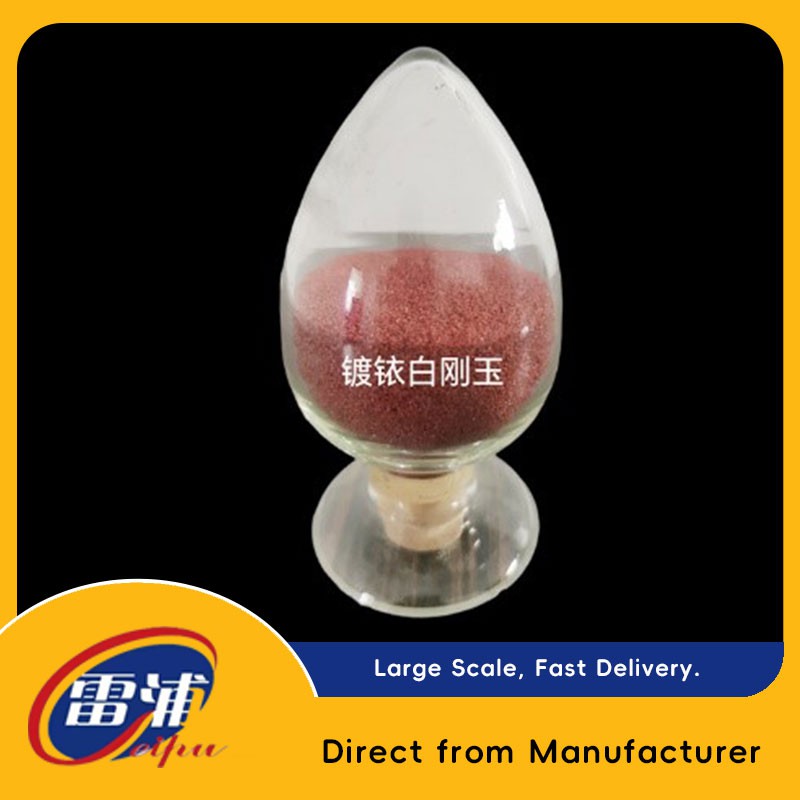
Fused mullite is just one of the many fused alumina - based materials. Comparing it with Iridium - coated White Corundum and Dense Corundum, we can see some differences. Iridium - coated White Corundum has excellent corrosion resistance due to the iridium coating, which is suitable for applications in extremely corrosive environments. Dense Corundum has a high density and hardness, making it ideal for high - wear applications. In contrast, fused mullite offers a good balance between thermal stability, mechanical strength, and chemical resistance, and its properties can be further tailored through the addition of appropriate additives.
6. Conclusion
In conclusion, additives play a vital role in modifying the properties of fused mullite. They can enhance various properties such as mechanical strength, chemical resistance, thermal conductivity, and thermal expansion behavior. However, careful consideration must be given to the type, amount, and compatibility of additives to achieve the desired results. As a Fused Mullite supplier, I am committed to understanding these effects and optimizing the product to meet the diverse needs of our customers. If you are interested in our Fused Mullite products or have any questions about the effects of additives on its properties, welcome to contact us for further discussion and procurement negotiation.
References
- Smith, J. K. (2015). Advances in refractory materials. Elsevier.
- Jones, A. B. (2018). The influence of additives on the properties of ceramic materials. Journal of Ceramic Science, 45(3), 210 - 225.
- Brown, C. D. (2019). Fused alumina - based materials in industrial applications. Springer.


