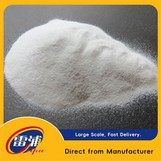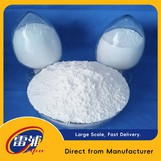

When considering Bayerite, a compound often overlooked yet pivotal in various industrial applications, it's crucial to understand its chemical properties. As a dedicated Bayerite supplier, I'm here to shed light on this remarkable substance and its unique characteristics.
1. Chemical Composition and Structure
Bayerite, with the chemical formula Al(OH)₃, is a crystalline hydroxide of aluminum. It belongs to the group of aluminum hydroxide minerals, which also includes Gibbsite and Nordstrandite. The structure of Bayerite is composed of layers of aluminum hydroxide octahedra. Each aluminum ion (Al³⁺) is surrounded by six hydroxide ions (OH⁻) in an octahedral arrangement. These layers are held together by weak hydrogen bonds. This layered structure gives Bayerite some distinct properties compared to other aluminum hydroxides.
The crystal structure of Bayerite is monoclinic, which means it has three unequal axes, with one of the axes being inclined to the other two. This monoclinic structure affects the physical and chemical behavior of Bayerite, such as its solubility and reactivity under different conditions.
2. Acid - Base Properties
One of the most notable chemical properties of Bayerite is its amphoteric nature. Amphoteric substances can react both as acids and as bases. When Bayerite reacts with acids, it acts as a base. For example, when it reacts with hydrochloric acid (HCl), the following reaction occurs:
Al(OH)₃ + 3HCl → AlCl₃ + 3H₂O
In this reaction, the hydroxide ions from Bayerite react with the hydrogen ions from the acid to form water, and aluminum chloride is produced.
On the other hand, when Bayerite reacts with strong bases, it acts as an acid. For instance, in the presence of sodium hydroxide (NaOH), the reaction is as follows:
Al(OH)₃ + NaOH → Na[Al(OH)₄]
This reaction forms a soluble sodium aluminate complex, indicating that Bayerite can donate a proton (although in a less typical way compared to traditional acids) and react with the base.
The amphoteric nature of Bayerite makes it useful in various chemical processes. In water treatment, it can be used to adjust the pH of water. If the water is too acidic, Bayerite can neutralize it by acting as a base, and if the water is too basic, it can react with the excess base to bring the pH back to a more suitable range.
3. Thermal Stability and Decomposition
Bayerite is not very thermally stable at high temperatures. When heated, it undergoes a series of decomposition reactions. At relatively low temperatures (around 150 - 200 °C), Bayerite starts to lose water molecules through a process called dehydration. The first stage of dehydration results in the formation of Boehmite, with the chemical formula AlOOH.
2Al(OH)₃ → 2AlOOH + 2H₂O
As the temperature is further increased, Boehmite can undergo additional decomposition to form aluminum oxide (Al₂O₃), also known as alumina.
2AlOOH → Al₂O₃ + H₂O
The thermal decomposition of Bayerite is an important process in the production of alumina, which has numerous industrial applications, such as in the manufacture of ceramics, catalysts, and refractory materials. The controlled thermal treatment of Bayerite allows for the production of different forms of alumina with specific properties.
4. Solubility
The solubility of Bayerite is highly dependent on the pH of the solution. In neutral or slightly acidic to basic conditions, Bayerite has very low solubility. This low solubility is due to the relatively strong bonding within the crystal structure and the stability of the aluminum - hydroxide complex. However, as mentioned earlier, in strongly acidic or strongly basic solutions, the solubility increases significantly. In acidic solutions, the formation of soluble aluminum salts occurs, while in basic solutions, the formation of soluble aluminate complexes takes place.
The solubility behavior of Bayerite is relevant in industrial processes such as the purification of aluminum ores. In the Bayer process, which is used to extract alumina from bauxite ore, the solubility differences of different aluminum compounds, including Bayerite, are exploited to separate alumina from impurities.
5. Reactivity with Other Chemicals
Bayerite can react with a variety of chemicals besides acids and bases. For example, it can react with carbon dioxide (CO₂) in the presence of water to form aluminum carbonate hydroxide compounds. The reaction is as follows:
2Al(OH)₃ + 3CO₂ → Al₂(CO₃)₃ + 3H₂O
Although the reaction may not be straightforward and may require specific conditions, the formation of aluminum carbonate hydroxide compounds can have implications in environmental applications, such as in the sequestration of carbon dioxide.
Bayerite can also react with certain metal salts. For instance, when it reacts with iron salts in a solution, it can form mixed metal hydroxides. These mixed metal hydroxides can have unique catalytic and adsorbent properties, which are useful in chemical synthesis and environmental remediation processes.
6. Applications Based on Chemical Properties
The chemical properties of Bayerite make it suitable for a wide range of applications. In the field of catalysis, its amphoteric nature and the ability to form different aluminum - containing compounds during thermal treatment make it a potential precursor for catalysts. For example, the alumina formed from the thermal decomposition of Bayerite can be used as a support material for metal catalysts in various chemical reactions, such as hydrocarbon cracking and oxidation reactions.
In the production of Macro Porous Pseudo Boehmite, Bayerite can be used as a starting material. Through specific chemical and physical treatments, Bayerite can be transformed into Macro Porous Pseudo Boehmite, which has high surface area and porosity, making it useful in applications such as adsorbents and catalyst carriers.
In the construction industry, Bayerite can be used as a flame - retardant additive. When added to polymers or other materials, it decomposes endothermically upon heating, absorbing heat and releasing water vapor. This process can help to slow down the spread of fire and reduce the flammability of the material.


Conclusion
In conclusion, the chemical properties of Bayerite are diverse and play a crucial role in its various applications. Its amphoteric nature, thermal decomposition behavior, solubility characteristics, and reactivity with other chemicals make it a valuable compound in industries such as chemical manufacturing, environmental protection, and construction. As a Bayerite supplier, I understand the importance of these properties and can provide high - quality Bayerite products tailored to your specific needs. Whether you are involved in research, development, or large - scale industrial production, our Bayerite can meet your requirements.
If you are interested in purchasing Bayerite or have any questions about its applications, please feel free to contact us for a detailed discussion. We are committed to providing you with the best products and services to support your projects.
References
- Atkins, P. W., & de Paula, J. (2010). Physical Chemistry. Oxford University Press.
- Huheey, J. E., Keiter, E. A., & Keiter, R. L. (1993). Inorganic Chemistry: Principles of Structure and Reactivity. HarperCollins College Publishers.
- West, A. R. (1999). Solid State Chemistry and its Applications. John Wiley & Sons.