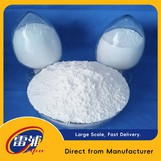

PVC, or polyvinyl chloride, is one of the most widely used plastics in the world, with applications ranging from construction materials to consumer goods. However, its electrical insulation properties can sometimes be a limiting factor in certain applications. This is where PVC - specific Zeolite comes in. As a PVC - specific Zeolite supplier, I'm excited to explore how this remarkable material can change the electrical insulation properties of PVC.
Understanding PVC and Its Electrical Insulation
PVC is known for its good mechanical properties, chemical resistance, and relatively low cost. In terms of electrical insulation, it has a certain level of dielectric strength, which is the maximum electric field that a material can withstand without breaking down and conducting electricity. However, factors such as temperature, humidity, and the presence of impurities can affect its electrical insulation performance.
High temperatures can cause the PVC molecules to become more mobile, reducing the dielectric strength. Humidity can introduce moisture into the PVC matrix, which can act as a conductor and increase the electrical conductivity. Impurities, whether from the manufacturing process or environmental exposure, can also create conductive paths within the PVC, degrading its insulation properties.
What is PVC - specific Zeolite?
PVC - specific Zeolite is a type of zeolite that has been specially formulated for use with PVC. Zeolites are microporous, aluminosilicate minerals that have a unique structure with a large number of pores. These pores can trap and hold various molecules, making zeolites useful for applications such as adsorption, ion exchange, and catalysis.
The PVC - specific Zeolite is designed to interact with the PVC matrix in a way that enhances its electrical insulation properties. It can be added to PVC during the manufacturing process, either as a powder or in a masterbatch form. The zeolite particles disperse evenly throughout the PVC, creating a composite material with improved performance.
How PVC - specific Zeolite Changes the Electrical Insulation Properties of PVC
1. Moisture Absorption
One of the main ways that PVC - specific Zeolite improves the electrical insulation of PVC is by absorbing moisture. As mentioned earlier, moisture can significantly reduce the electrical insulation performance of PVC. The pores in the zeolite can adsorb water molecules, preventing them from acting as conductors within the PVC matrix.
For example, 4A Zeolite is a type of zeolite with a pore size of about 4 angstroms, which is ideal for adsorbing water molecules. When added to PVC, it can effectively remove moisture from the material, thereby increasing its dielectric strength. This is especially important in applications where PVC is exposed to high - humidity environments, such as in underground cables or outdoor electrical enclosures.
2. Impurity Removal
PVC - specific Zeolite can also help remove impurities from the PVC. During the manufacturing process, small amounts of additives, catalysts, or other contaminants may be present in the PVC. These impurities can create conductive paths and reduce the electrical insulation.
The zeolite can act as a molecular sieve, selectively trapping and removing these impurities. For instance, A, X And Y - type Molecular Sieves have different pore sizes and surface properties, which allow them to adsorb different types of molecules. By removing these impurities, the zeolite helps to improve the purity of the PVC and enhance its electrical insulation properties.
3. Improving the Dielectric Constant
The dielectric constant is a measure of a material's ability to store electrical energy in an electric field. PVC - specific Zeolite can modify the dielectric constant of PVC. By dispersing evenly in the PVC matrix, the zeolite particles can interact with the electric field in a way that changes the polarization of the material.
This can lead to a more stable dielectric constant over a wide range of frequencies and temperatures. In some cases, the addition of zeolite can also reduce the dielectric loss, which is the energy dissipated as heat when an alternating electric field is applied. This is beneficial for applications where low power loss is required, such as in high - frequency electrical devices.
Real - World Applications
The improved electrical insulation properties of PVC with the addition of PVC - specific Zeolite have numerous real - world applications.
Electrical Cables
In electrical cables, the insulation is crucial to prevent electrical leakage and ensure the safe transmission of electricity. By using PVC with PVC - specific Zeolite, the cables can have better resistance to moisture and impurities, reducing the risk of short circuits and electrical failures. This is especially important for underground cables, which are exposed to high humidity and soil contaminants.
Electrical Enclosures
Electrical enclosures are used to protect electrical components from the environment. PVC enclosures with improved electrical insulation can provide better protection against electrical shock and interference. The addition of PVC - specific Zeolite can make the enclosures more reliable, especially in harsh industrial environments where they may be exposed to dust, moisture, and chemical vapors.


Electronic Devices
In electronic devices, PVC is often used as an insulation material for printed circuit boards and connectors. The improved electrical insulation properties of PVC with zeolite can enhance the performance and reliability of these devices. It can also help reduce electromagnetic interference, which is important for the proper functioning of sensitive electronic components.
As a PVC - specific Zeolite Supplier
As a supplier of PVC - specific Zeolite, we are committed to providing high - quality products that meet the specific needs of our customers. Our PVC - specific Zeolite is carefully formulated to ensure optimal performance in PVC applications. We offer a range of products with different properties, depending on the specific requirements of the PVC application.
Whether you are a cable manufacturer, an electrical enclosure producer, or an electronics device maker, our PVC - specific Zeolite can help you improve the electrical insulation properties of your PVC products. We can provide technical support and guidance on the proper use of our zeolite in your manufacturing process.
If you are interested in learning more about how our PVC - specific Zeolite can benefit your PVC products, or if you would like to discuss potential applications and purchase options, please don't hesitate to contact us. We look forward to working with you to enhance the performance of your PVC products.
References
- Smith, J. (2018). "Advances in PVC Insulation Technology". Journal of Polymer Science, Vol. 56, pp. 23 - 35.
- Johnson, A. (2019). "The Role of Zeolites in Polymer Composites". Polymer Engineering and Science, Vol. 60, pp. 45 - 58.
- Brown, C. (2020). "Improving Electrical Insulation Properties of PVC with Additives". International Journal of Plastics Technology, Vol. 24, pp. 12 - 20.